

Good Puzzle Design In Video Games
The Philosophy of Video Game Puzzle Design
Puzzle games are extremely popular, but they're notoriously difficult to design

T he puzzle genre is one of the most popular in video games. That's largely because it has a uniquely wide appeal — from the simple act of learning Tetris to the brain-melting experiences designed by Zachtronics . Although puzzle games aren't known to tax gamers in the same way as, say, fighting a boss in Dark Souls, puzzle design and structure presents a unique consideration for game designers. Every aspect of design (from onboarding to progression) must be carefully considered in order to keep players from slamming their heads against a metaphorical wall.
Growing the Puzzle Genre
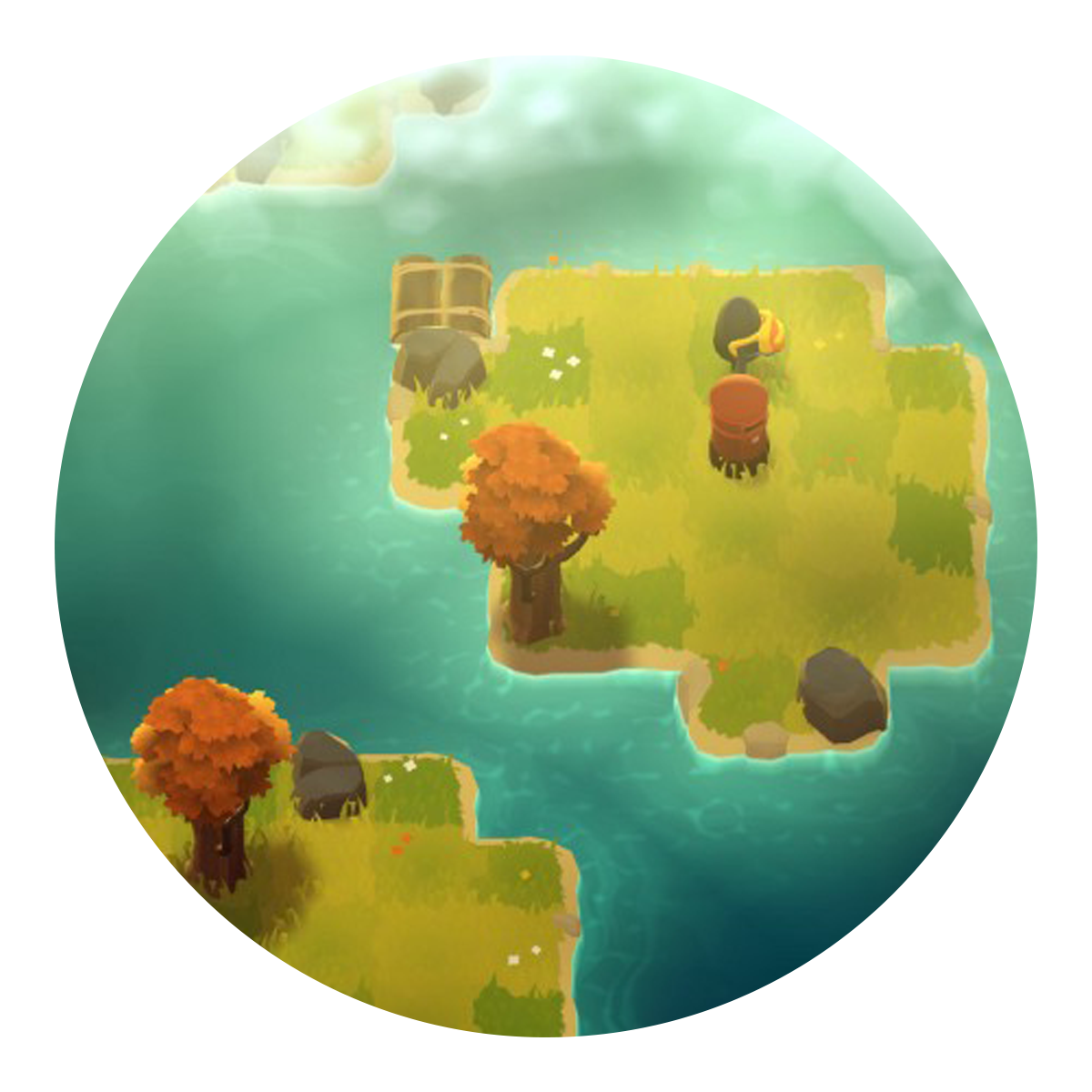
Depending on who you talk to, a puzzle game could be anything from casual "match 3" titles like Candy Crush right through to the subtly complicated Baba is You. As a genre, puzzle games have grown in numerous ways over the years. But one of the prominent factors in their growth relates to the way their content is presented to the player. Since its inception, many puzzle games have been built as just a series of non-connected puzzles. Players didn't approach these games with any expectation of receiving a meaningful connection or story.
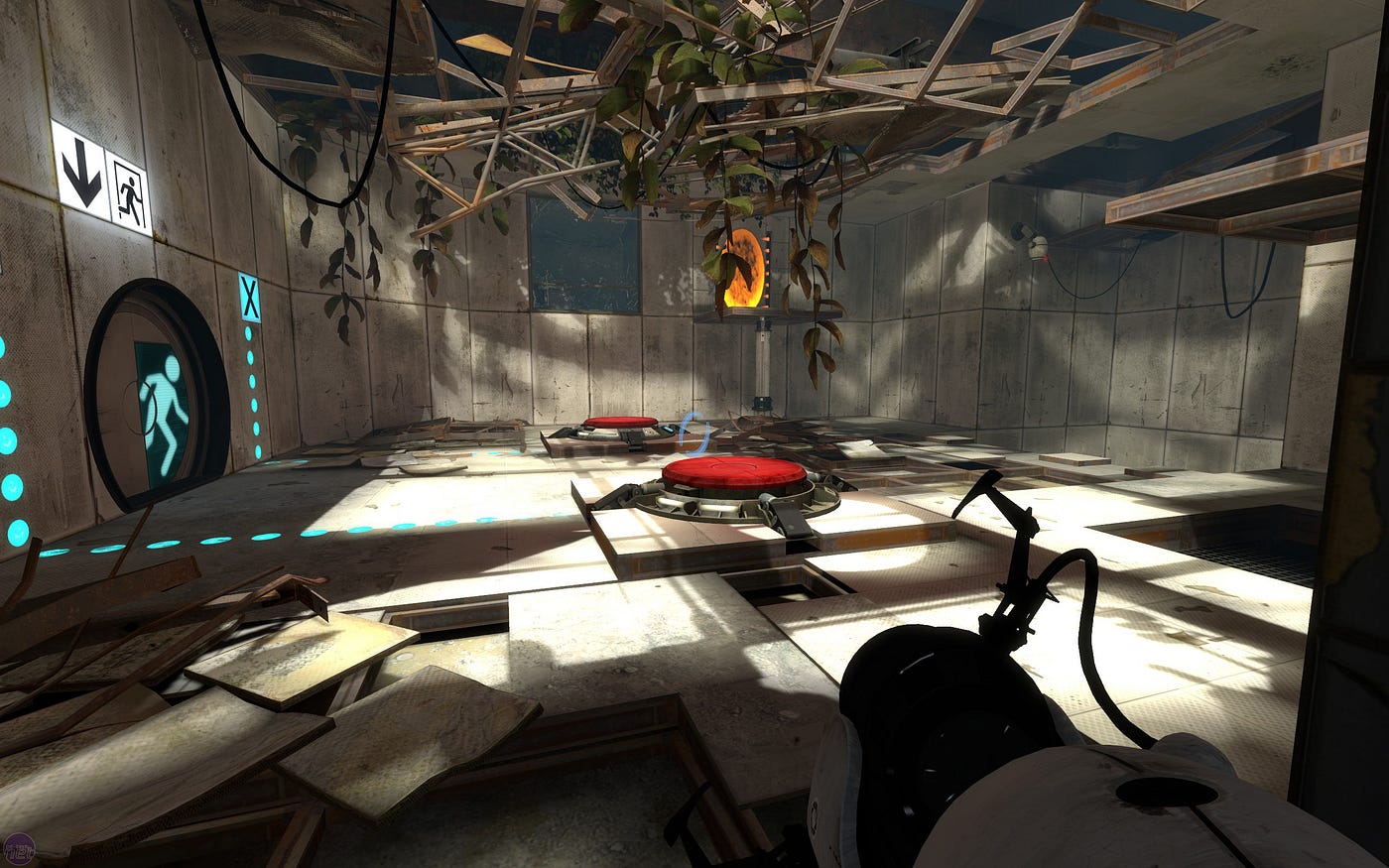
Over time, various games came along that pushed at the boundaries of traditional puzzle experiences. Portal, for example, introduced real-time physics (and a clever over-arching story) to the puzzle solving. Braid invited players into a strange world and told its story through the puzzles and locales. Games like Spacechem not only proved that there were totally new ways of designing a puzzle game, but that you could also get really complicated with the design. The bottom line is that we've seen more and more puzzle games being released that incorporate elements from other genres.
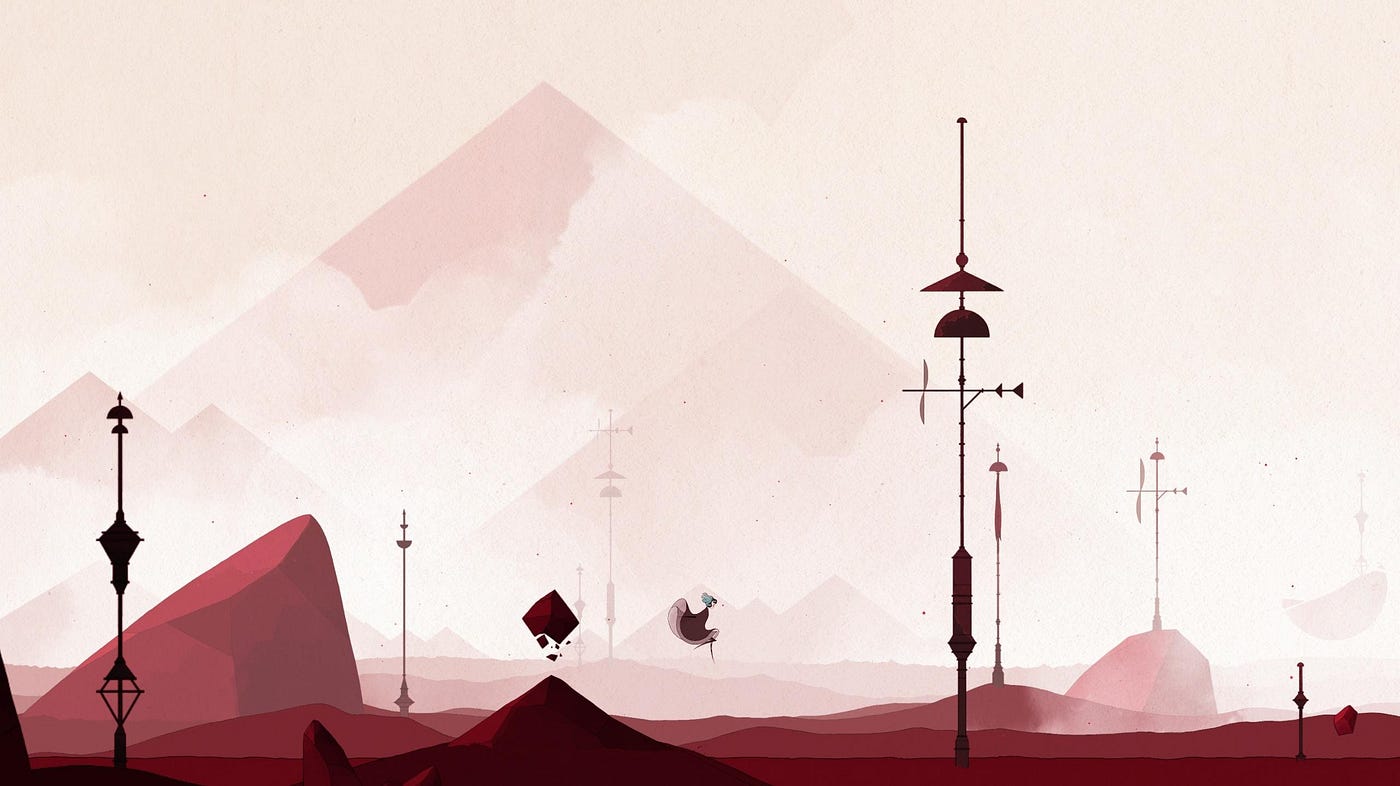
In a previous article for SUPERJUMP, I discussed the idea of elevating games — putting a greater focus on presentation in particular. This is something that has come to differentiate the puzzle genre, and enable it to grow well beyond its early confines. Over the last decade especially, many indie puzzle games have taken an approach of building worlds around their puzzles (either connecting those puzzles by location or using them to directly advance the plot). Some puzzle games — like the award-winning Gris — introduced a highly-emotional story that took center stage on equal footing to the puzzles themselves.
When discussing puzzle design (outside of the adventure genre, which is a unique case), there are two popular philosophies that designers use.
Linear and Nonlinear Puzzle Design
Although puzzle design can be a complicated task, the foundations that underpin it can be broken down into two basic forms.
The first is a linear puzzle.
In this case, the player must solve a problem using the tools and mechanics provided to them and there is only one valid solution. Even games that give players real-time control (such as puzzle-platformers) can still restrict the player's options by — for example — limiting their control while jumping. A popular example of this is "Sokoban" puzzles that challenge the player to move boxes to specific positions or create a path through a room. These handmade puzzles are a popular option for developers to flex their creative muscle and come up with ways to create enticing brainteasers. It's also worth noting that in games built around a very specific or esoteric design, it's easier to onboard players with guided puzzles (I'll delve further into this aspect in a moment).

The second type of puzzle is the nonlinear puzzle.
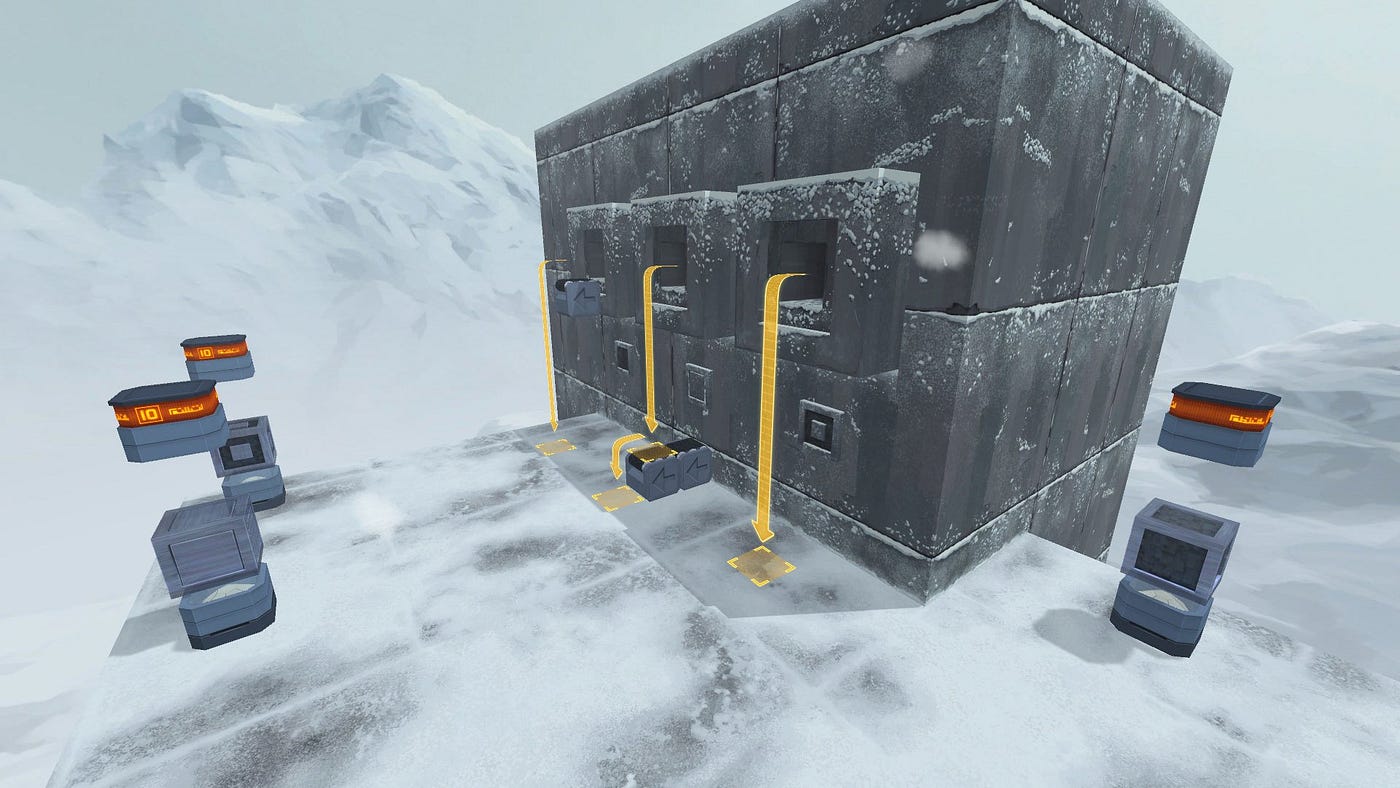
In this case, the options available at the beginning — as well as the end goal — are fixed. But there are multiple ways of solving the problem. The most notable example that comes to mind would be the titles from Zachtronics, a developer that specializes in advanced puzzle design. In their games, finding a solution is only half the battle — you then need to compare yours to your friends' in order to further improve. This kind of puzzle design is more about emergent gameplay than outright brain teasers. As the developer, you're presenting the player with a variety of tools and asking them to build a solution out of them.
Often, the player must manipulate whatever options are available to them at the outset with the tools they've been given. With linear puzzles, the player can't alter or change the constituent parts of the puzzles outside of the ways specified by the developer. But in a nonlinear puzzle, there's no such thing as one single "correct solution". Zachtronics' games contain histograms that grade a solution on various attributes, but that doesn't mean one single solution is necessarily the "best" one. In the case of Infinifactory, for example, there are people who go for minimalist solutions and those who attempt Rube-Goldberg master contraptions.
There are other ways to look at linear and nonlinear puzzles. One way is to consider how they are presented to the player. Linear puzzles don't typically give the player any tools that are external to the puzzle itself (that is to say, the tools offered to the player exist within the puzzle). The nonlinear approach is more likely to offer a set of tools for the player to learn, with the idea that these tools can be carried forward from one puzzle to the next.
As with all game design topics I discuss, there's no single superior option here. It's all about the implementation. And when approaching that question, one of the most important pieces to think about is player onboarding.
Onboarding Challenges
It may not necessarily seem obvious when viewed from the outside, but good puzzle design is very difficult to pull off. One of the toughest challenges for the developer is onboarding; it is the easiest place to quickly lose new players. Why?
Well, in action-based games, it can be quite easy to set up specific challenges or tests that the player can use to build up their mastery of game mechanics. These tests might exist in the form of small vertical slices of the broader game experience. Often, these tests are incorporated directly into the gamespace itself (as opposed to being a separate isolated tutorial) — Super Mario Bros. is a good example of a game that does this effectively.
But it's arguably not as easy to test the player in a puzzle game. Like the strategy and 4X genres, you can walk the player through the mechanics and rules but that doesn't mean they actually understand what's going on. The goal is to train the player to understand the hidden rules and dynamics of how the puzzles work so that they can figure things out and develop solutions without being directly told what to do. As you might expect, there's a huge challenge around this; the player is highly likely not to understand what's going on, or they might not make the relevant connections between concepts.
To go back to the Zachtronics example from earlier: a major aspect of the emergent gameplay involves figuring out the dynamics between tools that are only hinted at but never explicitly described to the player. And with Infinifactory, it's possible to set up logic gates and infinite loops using the tools provided, but the game never actually explains this explicitly to the player. That right there is one of the challenges with onboarding — if you give the player too much information, you're effectively solving all the puzzles for them. But if you offer too little, they aren't going to be able to connect the dots on their own. To put it another way: imagine you are explaining to someone how carpentry tools work. But the only guidance you give them is to tell them what each individual tool does — after that, you say "build a house".
In many of my pieces on good tutorial design, I raise three questions you need to answer for the player:
- What am I doing?
- How do I do it?
- Why do I do it?
Those questions must be answered for every rule, object, or tool you provide to the player to solve puzzles with. The order in which you introduce puzzles and their mechanics to the player is crucial. There are some games that like to establish an open-world structure that allow players to solve puzzles in virtually any order — while it's possible to design a satisfying experience around this, there's also a greater chance that the player will stumble into new rules or concepts before they've been properly introduced to them.
This actually brings me to an important topic that we don't often discuss — why so few people actually finish puzzle games.
The Thought Wall
When discussing action titles, it's common to touch on concepts like a skill floor and skill ceiling. That is to say, a minimum and maximum skill in order to beat the game. We could use this same description for puzzle games and the level of mastery required by the player to win. Although many people will tend to describe puzzle games as "casual" or "simple", they can absolutely be more brutal in terms of challenge than any Dark Souls or Doom clone.
The reason for this is due to "the wall" — it's the moment when the player fails or gets stuck. In action games, getting stuck at a challenging or difficult section can end up being a moment of pride (at least when the boss is defeated, or a checkpoint reached). In these games, playing the game repeatedly becomes an exercise in training the player to overcome the challenge. In Soulslikes, as an example, players get better over time leading to the game becoming progressively easier the more time they spend with it. The skill floor and ceiling of this genre are fairly close to each other — someone who figures out "how to play" early on in the game will have a good chance of completing it.
The same can't be said of puzzle games. Puzzles — by their very design — are black-and-white in nature. You either have a solution and you can move forward, or you don't. In action games, success can be measured in varying degrees — including nail-biting finishes. This is generally not the case in puzzle games. And, at least in many cases, the knowledge acquired when completing one puzzle doesn't necessarily translate to greater success with subsequent challenges.
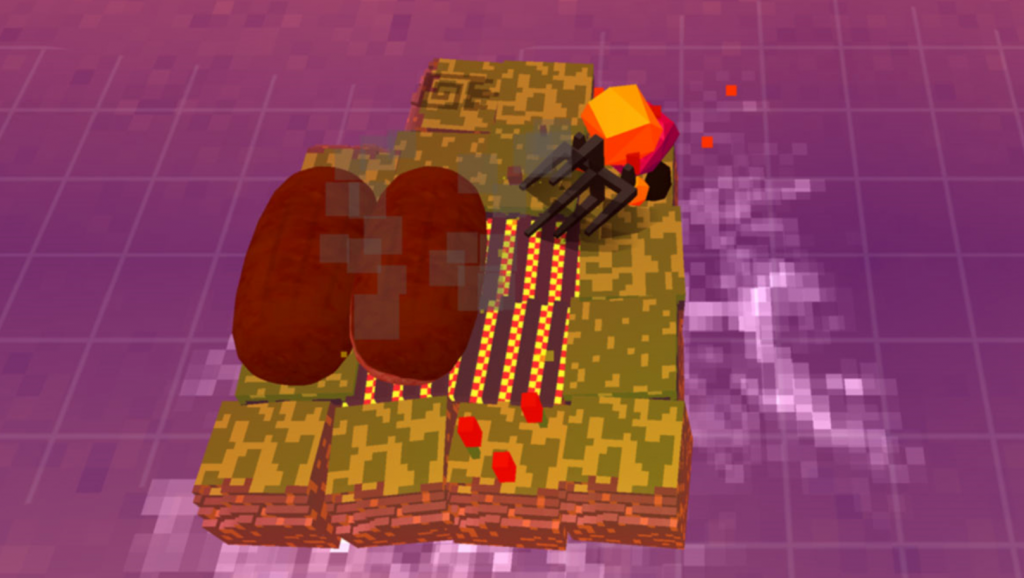
The overall rules and structure of the puzzles don't necessarily change much. But the dynamics and thought process behind them differs dpeending on the mechanics used. In the puzzle game Filament, for example, the player's goal in each puzzle doesn't change — they need to take a coil and wrap it around every tower to power them. What does change are the objects and processes used to solve each puzzle.
Earlier I spoke about emergent gameplay and how players start to learn how tools and mechanics interact with each other. Unfortunately, many people aren't able to make those connections for one reason or another. This is where they hit the wall when playing a puzzle game — and when that happens, enjoyment of the game nosedives.
When someone gets stuck in a puzzle game, all progress comes to a halt. There's nothing the player can do to progress other than solving the puzzle before them. For this reason, puzzle games are potentially more frustrating than many action games in general. In action games, developers can leverage a wide range of tools and techniques to help push the player forward. This can include everything from having the player grind for more power, call in help/support, change their build, or simply lower the difficulty of the challenge. But none of these options, generally, can be added to a puzzle game.
At this point you might be tempted to ask: "why not just let the player skip the puzzle?"
And sure, that's an option. But it is also the final nail in the coffin for players. Often, one puzzle will build upon another and become more difficult as time goes on. If the player can't figure out the solution to puzzle 3, then they aren't likely to resolve puzzles 4, 5, and 6. Sure, players can sometimes brute force a solution given enough time, but this isn't a fun solution for every single puzzle. Rather, once they skip one puzzle, they're likely to continue skipping.
If a player is actively skipping the core gameplay of your game, then one could argue that the purpose is well and truly defeated.
It's no surprise, then, that the drop-off rate for people playing puzzle games is often even sharper than action games. Further still, puzzlers that don't have an emphasis on presentation — that is, they are just a series of self-contained puzzles — can risk becoming tiresome, especially if the same elements repeat over and over again. Some puzzle games boast 100+ different puzzles, which sounds great on paper. But of course, it's unlikely that players will finish all of them; it's more likely that fatigue will set in at some stage.
A Puzzling Problem
Puzzle design is an area that we don't often talk about in video games, despite so many people enjoying the genre. Trying to make a puzzle game that is deep, engaging, and will provide players with enough help when they need it is very difficult. I often think about Artifex Mundi games and how they have an "instant solve" option that activates if a player is stuck in a section for too long and I wonder if that could be applied to other games as well (although it does, of course, carry a similar problem to the "skip" option discussed earlier).
Dear readers, can you think of engaging puzzle games that kept you invested all the way through, and were there any that you hit the wall and stopped playing?
If you enjoyed my post, consider joining the Game-Wisdom Discord channel . It's open to everyone.

Good Puzzle Design In Video Games
Source: https://superjumpmagazine.com/the-philosophy-of-video-game-puzzle-design-18291d01983f
Posted by: mooretandsold.blogspot.com
0 Response to "Good Puzzle Design In Video Games"
Post a Comment