

The Dos and Dont's of Water Cooling
Cooling computers has evolved in the last x years to the betoken where there are more options to satisfy all kinds of needs. All in One (AIO) water cooling kits in particular have gained popularity among users who want push frequencies higher while keeping their CPUs libation. They're very easy to become started with as they are by and large plug and play. While things take gotten easier in the water cooling game, in that location are yet many things that demand to be taken into consideration before jumping in to ensure yous can get the most performance from your own system.
Water cooling systems -- whether they are a custom loop or an AIO -- all follow the same basic principles. You take the reservoir, the pump, the radiator, the fans, some tubing, a block (for either the CPU, GPU, or both), and the h2o itself. More often than not on different versions of AIOs or custom loops you may see some of these features as barely noticeable, for example, many AIOs have very minor reservoirs that are not nearly as prominent as with other custom loops, but they are normally all there.
After years of working with water cooling kits, here are some of import tips to help y'all get the most out of your organization.
Mounting the Block
When mounting the block y'all want to have the best contact between the block itself and the component you're trying to cool. This does not mean that it needs to be extremely tight so it's most impossible to lossen the screw, instead y'all simply want to brand sure it has the correct amount of tightness then the organization'southward estrus is transferred properly to the radiator for cooling.
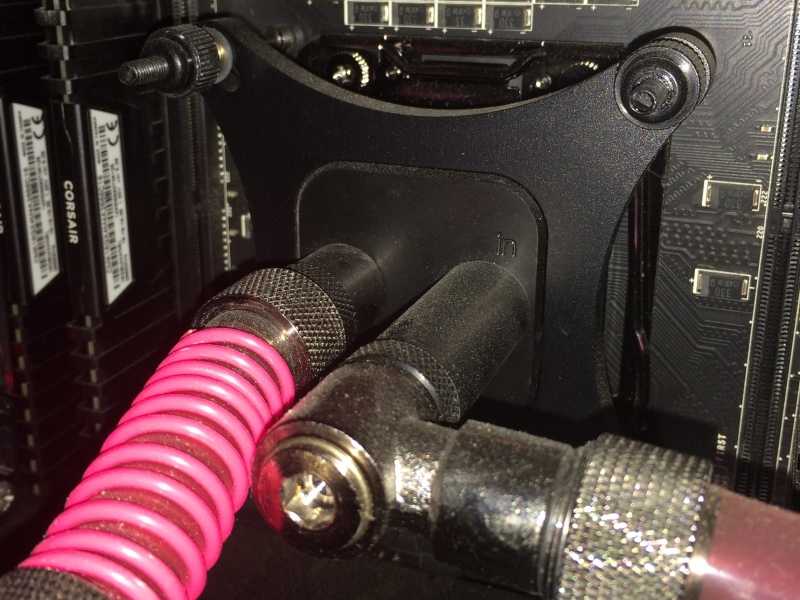
Do: Tighten the block down starting first at opposite ends of the cake and then add the other two. Tighten the screws down until they get a picayune snug.
Don't: Force the screws to tighten to the point they volition no longer move. Overtightening the libation can crusade the paste to leak out the sides causing poor contact betwixt the block and CPU and information technology can too crusade problems with the CPU and motherboard contact.
Mounting the Radiator into the Case
When choosing where to mount the radiator there are many options available, yet there are some locations that will allow the organisation to work bettter for both the h2o cooled components and the remainder of the system as well. Some users choose to mount the radiator to pull in fresh air from the exterior; others choose to have it push air out of the example. Which method works all-time will come up down to your own organisation every bit you lot want to make sure yous don't end upward impeding other components from cooling properly.

Image courtesy: Legit Reviews
Exercise: Pick a place for the radiator that allows every bit little bending as possible on the lines. You tin commonly adjust the lines to where they can sit comfortably in the system especially on AIOs. Yous just want the lines to keep their shape while bending so equally to not impede h2o flow.
Do: Mountain the radiator and so its airflow is non impeded past other devices in the auto. One of the best spots on a machine is the top of the case.
Do: Brand sure the fans are pushing the hot air either upwards or to the side of the radiator.
Exercise: Tighten the mounting screws snugly enough so the radiator cannot move to alleviate potential vibrating/noise.
Don't: Bend the tubes much. The harder the bend, the more likely it is to kink. Fifty-fifty with "Kink Resistant" tubing, information technology's still possible that bent tubes will reduce water menses. If you are worried nearly this, you lot can always utilise anti kink coils which tin can assist keep tubing from kinking.
Don't: Mount the radiator too close to other devices. If you mount the radiator and its fans as well close to a device pushing air in the opposite direction information technology tin can crusade a stalemate with the air and in turn give you higher temperatures. The radiator needs to be put in a way it is not impeded by any device in the organization to ensure you get the most performance out of the cooling system.
Don't: Have the radiator push button its air downward. This goes against the laws of physics and can crusade the radiator to stalemate air. Hot air likes to rise then if the radiator is dissipating heat that air is going to travel up at some point. You want the radiator and fans to have equally little trouble as possible when moving hot air out, which volition meliorate temps and proceed the system quieter.
Don't: Overtighten the screws when mounting it. Generally the screws that are sent with the radiators are designed to fit within the specifications of the kit it comes with. Overtightening the screws tin take adverse effects like angle the radiator, puncturing the radiator, or causing warping on the radiator and its fans which tin lead to damage.
Placement of the Fans
When it comes to fans the first concern is the configuration they should be in. Some people adopt to have the fans pushing air through the radiator, others choose to have the air pulled through the radiator, and the rest choose to accept both.
In do the results are almost the aforementioned using whatsoever of these methods. If you want to use a push button and pull system on your radiator, this will requite you a more than consistent speed of air moving through the radiator and makes it less likely for air to escape from the sides of the radiator. More than and more fans today are designed to provide better air pressure whether they are going on a radiator or estimator heatsink. So while your results will vary depending on the fans, using a button and pull setup on your radiator is not necessary in most cases but can give a petty boost to get the best possible performance out of your cooling system.

Do: Mount the fans pushing in a direction where hot air can travel freely (Straight up or to the side). The fans should be impeded equally little every bit possible when pushing or pulling air through the radiator to requite the most operation for the whole system.
Don't: Mount the fans pushing air down. This can cause air to stalemate in a example as the air volition attempt to travel back up in the instance and can clash against other components (like graphics cards with coolers that push button air to the sides of the card in the case), which tin can result in college temps of not simply the liquid cooling loop but the other components too.
Testing/Finalizing your System
After you complete your first water cooling setup it is important to test out its functionality regardless if information technology was an AIO or a total custom loop. While reliability has improved significantly over the years, there is withal the chance of a dead component that could hinder your system.
There is also the adventure that a role is mounted improperly or that a component conflicts with your positioning of the radiator and fans, which tin cause lower than normal cooling performance. Watching the device power upward for the get-go time and begin moving water can immediately permit you encounter if there are any problems (leaks, weird noises) that need addressing.
After that, look at the idle temperatures from the hardware you lot are cooling as that can immediately testify if at that place'due south a problem. Your automobile should be running at a lower temp than earlier installing the h2o cooling system, usually below 50C depending on the device. You can check around what others have accomplished with similar setups to get a general idea.

Epitome courtesy: Scrap-tech
Do: Test your setup earlier proceeding to your normal computer routine. You should check your idle and load temps to make certain they are staying within the manufacturer's safe range and that the arrangement runs in the expected range for the cooling you accept bought/fabricated.
Don't: Immediately return to your normal computing routine or overclock without first confirming functionality. While mod solar day processors and graphics cards are equipped well to keep their temps down in the effect of an issue with cooling, running devices almost their temp limits tin can cause damage and somewhen ruin the component.
Nowadays at that place'south an abundance of h2o cooling solutions to fit nigh people's needs and a range of form factors. Whether you lot're after a silent arrangement, serious overclocking, or simply some geek cred and sleek looks, if you're just exploring this world, going with an AIO package is probably the safest bet, but you can get every bit involved as you want all the way to cutting tubing and building your own loop to cool your CPU, GPU, motherboard, and more.

Source: https://www.techspot.com/guides/1059-water-cooling-101/
Posted by: mooretandsold.blogspot.com
0 Response to "The Dos and Dont's of Water Cooling"
Post a Comment